Cooling Systems Seasonal HVAC Tips
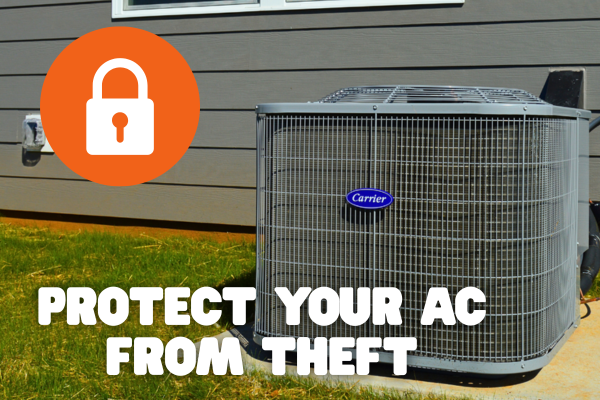
Most of us don’t think twice about locking our car or our front door to deter thieves, but have you ever considered that one home item most likely to be stolen is just sitting out in the open, totally unsecured? We’re talking about air conditioners, and at least one home insurance provider has stated they account for around a quarter of all theft claims.
Is there anything you can do to prevent A/C theft? You bet there is. We’ve got all the advice and tips you need to keep your air conditioning system (and the rest of your home) protected. Read on to learn more.
Your air conditioner’s outdoor unit contains valuable copper in the evaporator coils, refrigerant lines, and wiring. This makes it vulnerable to thieves who won’t hesitate to destroy your most expensive A/C component to harvest the copper.
Air conditioners are more vulnerable to theft than other HVAC system components like furnaces or heat pumps, largely because the most valuable part of the system is sitting outside the home, usually unsecured. A/C units are also more likely to be tucked away out of sight, giving thieves even more opportunity to skulk around in the shadows and wait for the right moment to strike.
These units are harvested and sold for scrap metal, usually netting the burglars anywhere from $20-$100. It’s a pretty small return that comes with a lot of risk, but it’s quick money, and most scrap yards don’t ask too many questions. The loss for the homeowner, however, is far more significant. These thefts typically result in insurance claims or out-of-pocket expenses in the thousands.
Not surprisingly, more portable and accessible window units are just as likely to be stolen, and may cause some property damage in the process.Our tips below to protect your home can be used to keep thieves away from your property, but there are also some window unit-specific steps you can take:
Outdoor units are large and unwieldy, but that doesn’t stop thieves from trying to take them, or destroy them to get to the valuable metals inside. Here are some steps you can take to deter the criminal element from stealing or vandalizing your A/C system:
A cage can provide effective year-round protection since most thieves won’t want to spend the extra time needed to cut through reinforced steel to reach their target. Their goal is a quick theft and a fast getaway. Be sure to consult a knowledgeable HVAC pro about whether a cage can be installed securely before you invest in one.
If a thief is looking to steal the condenser or other components from your A/C unit, they will attempt to shut off the power first. Placing a lock on the disconnect box can prevent a burglar from following through with their plan, unless, of course, they want a nasty shock.
Be sure your outdoor unit isn’t inviting thieves by being too accessible or easy to break into. You can paint any accessible copper coils or lines with a bold neon color. This makes your property easier to identify and makes it harder for thieves to sell off in a hurry. You could also install a concrete base and secure the A/C unit to that. Also consider camouflaging the unit, by planting shrubs around it or adding lattice panels.
Technology has made it easier to chase down stolen goods, if they’re equipped with a wireless GPS tracker. You can install a wireless tracker on your A/C unit, making it much more likely that your item will be recovered and the perpetrators apprehended.
You don’t have to encase your air conditioner in cement or lock up your condenser unit, but there are other ways to keep your HVAC system — and your entire home — secure. Consider these whole-home security tips:
When it comes to home safety, you don’t have to go it alone. Work with your neighbors and your community to take measures to help protect everyone’s property.